ALL ABOUT LEMON

Source: Nutrient data for this listing was provided by USDA SR-21. Each "~" indicates a missing or incomplete value.
Percent Daily Values (%DV) are for adults or children aged 4 or older, and are based on a 2,000 calorie reference diet. Your daily values may be higher or lower based on your individual needs.
Nutrition Data's Opinion, Completeness Score™, Fullness Factor™, Rating, Estimated Glycemic Load (eGL), and Better Choices Substitutions™ are editorial opinions of NutritionData.com, given without warranty, and are not intended to replace the advice of a nutritionist or health-care professional. Nutrition Data's opinions and ratings are based on weighted averages of the nutrient densities of those nutrients for which the FDA has established Daily Values, and do not consider other nutrients that may be important to your health or take into account your individual needs. Consequently, Nutrition Data's higher-rated foods may not necessarily be healthier for you than lower-rated ones. All foods, regardless of their rating, have the potential to play an important role in your diet.
IF Rating™ is a trademark of Monica Reinagel. Data for the IF Rating was provided by inflammationfactor.com.
Percent Daily Values (%DV) are for adults or children aged 4 or older, and are based on a 2,000 calorie reference diet. Your daily values may be higher or lower based on your individual needs.
Nutrition Data's Opinion, Completeness Score™, Fullness Factor™, Rating, Estimated Glycemic Load (eGL), and Better Choices Substitutions™ are editorial opinions of NutritionData.com, given without warranty, and are not intended to replace the advice of a nutritionist or health-care professional. Nutrition Data's opinions and ratings are based on weighted averages of the nutrient densities of those nutrients for which the FDA has established Daily Values, and do not consider other nutrients that may be important to your health or take into account your individual needs. Consequently, Nutrition Data's higher-rated foods may not necessarily be healthier for you than lower-rated ones. All foods, regardless of their rating, have the potential to play an important role in your diet.
IF Rating™ is a trademark of Monica Reinagel. Data for the IF Rating was provided by inflammationfactor.com.
The Many Uses of Lemon As a Health Supplement
Lemon juice is normally sprinkled onto fish dishes because its acidity can neutralize the basicity of the amines found in fish thereby converting them an ammonium salt complex. Furthermore, lemon juice is widely used, in conjunction with other ingredients, when marinating meat before cooking. The citric acid can denature, or break down, the cadherin and cadhesin proteins that hold the meat's muscle fibers together. Therefore, use of lemon juice allows the meat to become tender. It is a myth that lemon juice makes a good antibiotic. In reality, lemon juice that is sprinkled on freshly cut fruit such as pears helps to prevent oxidation (or browning of fruit).
Some people choose to eat lemon as a fruit. By doing so, be sure to consume water afterwards to help wash the citric acid and sugar from the teeth. Failure to do so can promote a favorable environment for tooth decay and other diseases of the dentition. One hundred mL of lemon juice contain about 50 mg of vitamin C and 5 g of citric acid. In Ayurvedic medicine, it is believed that a cup of hot water with lemon juice in it can cleanse and purify the liver.
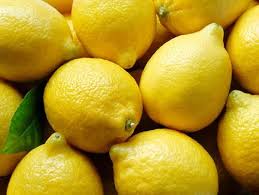
Lemons are ovoid in shape and light yellow in color and have a thick, rough skin when ripe. When buying lemons, be sure to choose smooth-skinned lemons in case you plan to store lemons for a period of time in your refrigerator. Lemons are plentiful in many food nutrients such as citric acid. They are widely used for medicinal purposes due to their citric acid and vitamin C content. In addition, they are highly regarded for their juice which is many times used as an accessory to food. Lemon juice has the ability to improve the flavor and increase the taste of many different dishes.
For those who have symptoms of indigestion such as bloating, heartburn, and belching, they will find that lemon juice can promote relief. By drinking lemon juice on a regular basis, the bowels can eliminate waste more efficiently thus minimizing constipation and diarrhea.
Other nutrients found in lemon include potassium 48.3%, calcium 29.9%, phosphorus 11.1%, and magnesium 4.4%. Lemons have been found useful in treating conditions such as asthma, colds, coughs, diphtheria, liver problems, scurvy, and rheumatism.
Scientists advise that lemon water should be used in every person that has a tolerance for it. That is, if there is no allergic reaction to lemon (as a small percentage of the population does have a true allergic reaction to lemon) and no active ulcers, then all children and adults should ingest lemon water. The juice in lemon provides a natural strengthening reagent to liver enzymes by helping to affix oxygen and calcium in the liver to regulate blood carbohydrate levels, which, in turn, affects blood oxygen levels. The liver can manufacture more enzymes out of fresh lemon juice than any other kind of food.
There are many benefits to drinking lemon juice including the prevention of different kinds of disorders, viruses, and diseases.
- Oral diseases: Due to the high concentration of vitamin C, this property of lemon juice helps to strengthen the gums and teeth. It is also highly effective in the prevention of acute inflammations of the margins of the gums, cavities, and other oral diseases.
- Digestive problems: Lemon juice promotes the flow of saliva and gastric juice and is looked upon as an excellent digestive agent. It helps to kill intestinal parasites and eliminates gases that form in the gastrointestinal tract. This juice is very beneficial in treating several digestive anomalies such as dyspepsia (acid reflux) and constipation. Drinking fresh lemon juice with water easily relieves acid reflux.
- Rheumatic affections: Even though lemon has a sour taste, its reaction in the body is basic (or alkaline). Taking advantage of this valuable information can allow one to treat rheumatic affections such as gout, sciatica, low back pain, hip joint pain, and rheumatism, which all result from too much acidity in the body. Taking in adequate amounts of lemon juice can prevent the deposition of uric acid crystals in the tissues and thus help eliminate the possibility of an attack of gout.
- Circulatory problems: Lemon juice is not only abundant in vitamin C, it is also a rich source of vitamin P (bioflavonoids), which is found both in the juice and the peel of the fruit. Vitamin P is essential for controlling bleeding in a variety of conditions and for promoting capillary integrity. Lemon is highly regarded as a valuable food medicine in the treatment of high blood pressure and arteriosclerosis.
- Foot relaxation: Soaking your sore feet in hot water is a great way to relax the feet. Then you rub your feet with fresh lemon juice. The heat from the water will promote opening of the pores while subsequent application of lemon juice will provide a cooling, astringent effect. It is believed that this method also promotes healthy sleep.
- Throat problems: Throat disorders such as catarrh, choking sensations, and itching sensitivities can be relieved by the properties found in lemon juice. A ripe unpeeled lemon should be roasted slowly until it starts to crack open. Then harvest one teaspoon of its juice, add a small amount of honey, and ingest it about once every hour. Sip it slowly.
- Fevers: Lemon juice is a great thirst-quencher when you are suffering from pox, scarlet, measles, and other fevers. These fevers promote dehydration, polydipsia (extreme thirst), and very hot and dry skin.
- Cold: If you suffer from a bad cold, juice two lemons and combine with 500 mL of boiling water. Add honey, and take at bedtime. Again, sip it slowly.
- Cholera: The properties of lemons can kill cholera bacilli instantaneously. Lemons are very effective for this purpose when freshly juiced.
The Ayurveda has regarded lemon as a valuable fruit and admired its properties. Lemon is sour, warm, promoter of gastric fire, light, good for vision, pungent and astringent. It checks the excessive flow of bile and cleanses the mouth. It dislodges phlegm (cough) and expels wind from the digestive tract. It helps in digestion and removes constipation. It prevents vomiting, throat trouble, acidity and rheumatism. It destroys intestinal worms.
Though lemon is acidic to the taste, it leaves off alkaline residues in the body. This is why it is useful in all symptoms of acidosis.
Lemon-juice is a powerful antibacterial. It has been proved by experiments that the bacteria of malaria, cholera, diphtheria, typhoid and other deadly diseases are destroyed in lemon-juice.
It also contains some vitamin A. Natural vitamin C is much more effective than the synthetic one. Vitamin C of lemon-juice is very effective because it is combined with bioflavonoids (vitamin P). In addition to vitamin C, lemon also contains niacin and thiamin in small amounts.
One should not take concentrated lemon-juice. It should be diluted with water before taking it. Pure lemon juice contains acid which is injurious to the enamel of teeth.
The body is well cleansed if lemon-juice mixed with cold water and honey is taken on an empty stomach early in the morning. Warm water may be used occasionally to get relieved of constipation.
Lemon-juice prevents or restrains influenza, malaria and cold.
Lemon-juice gives good relief in fever. Lemon-juice mixed with water is useful in quenching the thirst of the patients suffering from diabetes. It gives immediate relief in abdominal disorders. Lemon acts as a sedative for the nerves and the heart and allays troublesome palpitation.
Lemon is especially appreciated for its vitamin C value. When Vasco da Gama made his voyage round the 'Cape of Good Hope' nearly two-thirds of his crew died of scurvy. But at present the recurrence of such a disaster is no longer possible owing to the widespread use of lemon. Innumerable boatmen moving in sea have saved their lives with the use of lemon.
Vitamin P in lemon strengthens the blood vessels and prevents internal haemorrhage. It is, therefore, extremely useful in high blood pressure, in which cerebro-vascular accidents commonly occur.
The most valuable ingredient of lemon, next to vitamin C, is citric acid, of which it contains 7.2 per cent. Lemon contains more potassium than apple or grapes, which is beneficial to the heart.
Lemon is very much useful in maintaining the health of the teeth and the bones. The vitamin C content of lemon helps considerably in calcium metabolism.

Lemon has been proved to be a blessing for mountaineers. In the cases of insufficient oxygen and difficulty in breathing lemon comes to their rescue. Edmund Hillary, the first man to put his foot on the top of Mt. Everest, has admitted that his victory over Mt. Everest was greatly due to lemon.
No comments:
Post a Comment